

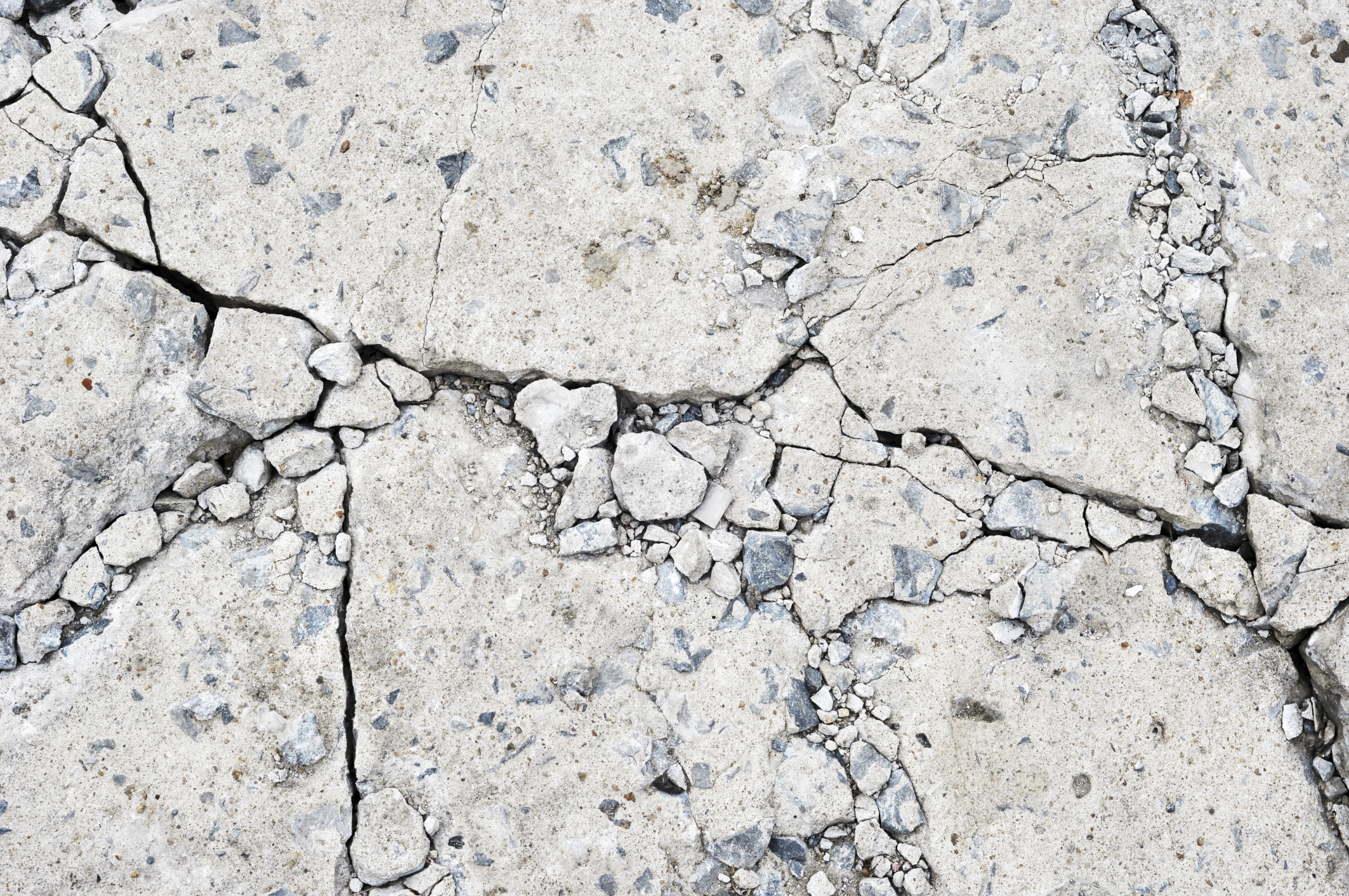
Concrete cracks can stem from many different issues, but Tri-State Paving can solve them all.
Concrete is one of the most durable building materials available, but it’s not indestructible. If you’ve noticed cracks in your driveway, patio, foundation, or sidewalk, you may be wondering: what causes concrete to crack? Understanding the causes can help you prevent costly repairs, protect your investment, and know when cracks are cosmetic versus structural.
Why Does Concrete Crack?
Concrete cracks because it is strong in compression but weak in tension. When internal or external forces create stress that exceeds its tensile strength, cracking occurs. While some cracking is completely normal, other cracks may indicate deeper structural problems.
So, let’s talk about what causes concrete to crack.
Shrinkage During Drying
One of the most common answers to what causes concrete to crack is shrinkage.
Why It Happens:
When concrete is poured, it contains water. As the water evaporates during curing, the concrete shrinks. If the shrinkage is restrained (by subgrade friction, rebar, or adjacent structures), cracks can form.
Common Signs:
- Thin, hairline cracks
- Random surface cracks
- Occur within days or weeks after pouring
Prevention:
- Proper curing methods (moist curing)
- Using control joints
- Correct water-to-cement ratio
Shrinkage cracks are usually cosmetic but should still be monitored.
Temperature Changes
Temperature fluctuations are another major factor in what causes concrete to crack.
Why It Happens:
Concrete expands when heated and contracts when cooled. Without expansion joints, repeated freeze-thaw cycles or seasonal temperature changes can cause cracking.
Cold Climate Risks:
- Water enters small pores
- Water freezes and expands
- Internal pressure causes cracks
Prevention:
- Install expansion joints
- Use air-entrained concrete in cold climates
- Seal surfaces to prevent water intrusion
Improper Subgrade Preparation
Poor soil preparation is a leading structural reason behind what causes concrete to crack.
Why It Happens:
If the ground beneath the concrete shifts, settles, or wasn’t compacted properly, the slab loses support.
Warning Signs:
- Uneven slabs
- Large diagonal cracks
- One side of the crack is higher than the other
Prevention:
- Proper soil compaction
- Stable gravel base
- Soil testing before major pours
Foundation cracks often stem from subgrade movement.
Overloading or Excess Weight
Concrete is designed to support specific loads. Exceeding that load capacity is another reason concrete cracks.
Examples:
- Heavy vehicles parked on residential driveways
- Hot tubs installed on patios without reinforcement
- Industrial equipment on thin slabs
Prevention:
- Proper thickness design
- Reinforcement with rebar or wire mesh
- Engineering load calculations
Structural cracks from overloading should be evaluated by a professional.
Poor Concrete Mix Design
An improper mix can significantly impact durability.
Common Issues:
- Too much water weakens concrete
- Incorrect aggregate proportions
- Low cement content
Adding excess water makes concrete easier to pour but dramatically reduces strength, making cracking more likely.
A proper mix design is essential when addressing what causes concrete to crack long-term.
Lack of Control Joints
Control joints are intentional weak points that allow concrete to crack in planned locations.
Without them, cracking becomes random.
Why They Matter:
Concrete will crack. Control joints simply guide where it happens.
Best Practice:
- Install joints every 8–12 feet (depending on slab thickness)
- Cut joints at proper depth (¼ slab thickness)
Missing or poorly placed joints are a preventable cause of cracking.
Corrosion of Reinforcement
In reinforced concrete, steel rebar can rust if moisture penetrates.
Why It Causes Cracks:
- Rust expands as it forms
- Expansion creates internal pressure
- Concrete cracks from the inside outward
This is more common in:
- Coastal environments
- Areas with road salt exposure
Sealing and proper concrete cover depth help prevent corrosion-related cracks.
Tree Roots and Vegetation
Nature can also be responsible for what causes concrete to crack.
Tree roots grow underneath slabs, lifting and shifting them over time.
Signs:
- Raised sidewalks
- Cracks near landscaped areas
- Progressive widening cracks
Installing root barriers and planning landscaping carefully can help prevent this issue.
Receive Concrete Installation Services with Tri-State Paving
Call Tri-State Paving. We’re a seasoned asphalt pavement company based in Maryland and have the experience and knowledge to help you with asphalt, concrete, and hardscaping projects.
We refuse to sell hot air to our customers, and that’s why we have been around for over four decades. We listen, inform, educate, and then decide what is best for our customers’ project and budget. If any problems arise during construction, we keep our customers updated and respond to make the imperfect perfect.
Our area numbers are:
West Chester: 610.563.9456
Oxford: 610.932.3566
Delaware: 302.757.4100
Check back here for weekly updates on current projects, important paving facts and info, and smart ideas for homeowners interested in concrete, asphalt, or hardscaping work.
Tags: concrete contractor, concrete cracking, concrete problems
 ASPHALT
 Commercial
 Residential
 Industrial
 Decorative
 Sealcoating
 Infrared Repairs
 CONCRETE
 Flat Work
 Decorative
 Curbs/Gutters
 Steps
Steps
 Slab Jacking
 Pump Trucks / Pump Trailers
 HARDSCAPES
 Walls / Borders / Curbs
 Walks / Patios
 Aprons
 Steps
Steps
 Columns / Fire Pits
 Outdoor Kitchens