

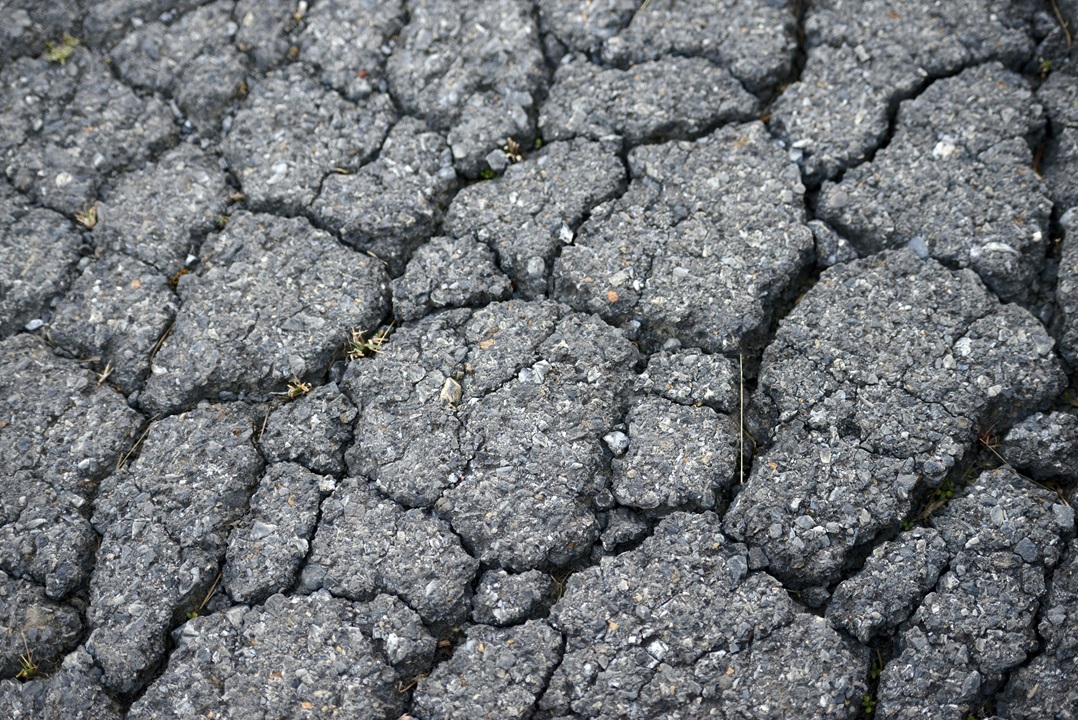
Learn about Maryland’s freeze-thaw cycle and how to care for your asphalt.
Maryland winters may not be the harshest in the country, but the region’s constant temperature fluctuations create the perfect conditions for asphalt damage. If you’ve ever wondered why potholes and asphalt cracks seem to crop up during colder months, the answer often lies in the freeze-thaw cycle. Understanding how the freeze-thaw cycle impacts asphalt pavement can help property owners protect their driveways, parking lots, and roadways before the damage becomes severe.
What Is the Freeze–Thaw Cycle?
Maryland’s winter temperatures frequently rise above freezing during the day and dip below freezing at night. This pattern sets the stage for a destructive cycle:
- Water enters cracks and pores in your asphalt: Even small, hairline cracks allow moisture to seep in.
- Temperatures drop below 32°F, and the water freezes: When water freezes, it expands by about 9%.
- The expanding ice pushes against the pavement: This widens existing cracks and creates new ones.
- Temperatures warm up, and the ice melts: Water flows deeper into the pavement, repeating the process.
This repeated expansion and contraction is the root cause of most winter asphalt deterioration.
How the Freeze–Thaw Cycle Damages Asphalt Pavement
1. Widening Cracks
Cracks that start small become significantly larger as the freeze-thaw process pushes them wider from the inside. Without timely crack sealing, these openings allow even more moisture intrusion, accelerating damage.
2. Formation of Potholes
As water penetrates the asphalt and reaches the base layer, the freeze-thaw cycle can weaken its structural support. Over time, the asphalt surface collapses into these weakened spots, forming potholes.
3. Surface Erosion
Repeated thawing softens asphalt binders, while refreezing breaks them apart. This results in raveling, loose surface aggregates, and a rougher, more brittle pavement surface.
4. Base Layer Weakening
The real damage often occurs out of sight. When water seeps into the foundation and freezes, it disrupts soil stability. A weakened base means the pavement above it will fail faster and more dramatically.
5. Increased Liability Risks
For commercial and residential property owners, damaged asphalt is more than an inconvenience—it’s a liability. Uneven surfaces, cracks, and potholes increase the risk of trips, falls, and vehicle damage.
Protecting Asphalt from Freeze–Thaw Damage in Maryland
While you can’t control the weather, you can control how prepared your pavement is. Here’s how to reduce how severely the freeze-thaw cycle impacts asphalt pavement:
Seal Cracks Before Winter
Crack sealing is one of the most cost-effective maintenance steps. By stopping water infiltration, you stop freeze-thaw damage at its source.
Apply Sealcoating
Asphalt sealcoating shields your asphalt from moisture, UV rays, and chemical exposure. Ideally, sealcoat every 2–3 years.
Ensure Proper Drainage
Standing water accelerates freeze-thaw damage. Grade correction, trench drains, or simple re-leveling can dramatically improve water flow.
Repair Potholes Promptly
Cold patch repairs can keep potholes from growing throughout winter, preserving safety and preventing further base-layer damage.
Receive Asphalt Paving Services with Tri-State Paving
Call Tri-State Paving. We’re a seasoned asphalt pavement company based in Maryland and have the experience and knowledge to help you with asphalt, concrete, and hardscaping projects.
We refuse to sell hot air to our customers, and that’s why we have been around for over four decades. We listen, inform, educate then decide what is best for our customers project and budget. If any problems arise during construction we keep our customers updated and respond to make the imperfect perfect.
Our area numbers are:
West Chester: 610.563.9456
Oxford: 610.932.3566
Delaware: 302.757.4100
Check back here for weekly updates on current projects, important paving facts and info, and smart ideas for homeowners interested in concrete, asphalt, or hardscaping work.
Follow us on Facebook, Twitter, and Pinterest.
Tags: freeze-thaw cycle, Maryland winter, winter asphalt maintenance
 ASPHALT
 Commercial
 Residential
 Industrial
 Decorative
 Sealcoating
 Infrared Repairs
 CONCRETE
 Flat Work
 Decorative
 Curbs/Gutters
 Steps
Steps
 Slab Jacking
 Pump Trucks / Pump Trailers
 HARDSCAPES
 Walls / Borders / Curbs
 Walks / Patios
 Aprons
 Steps
Steps
 Columns / Fire Pits
 Outdoor Kitchens