

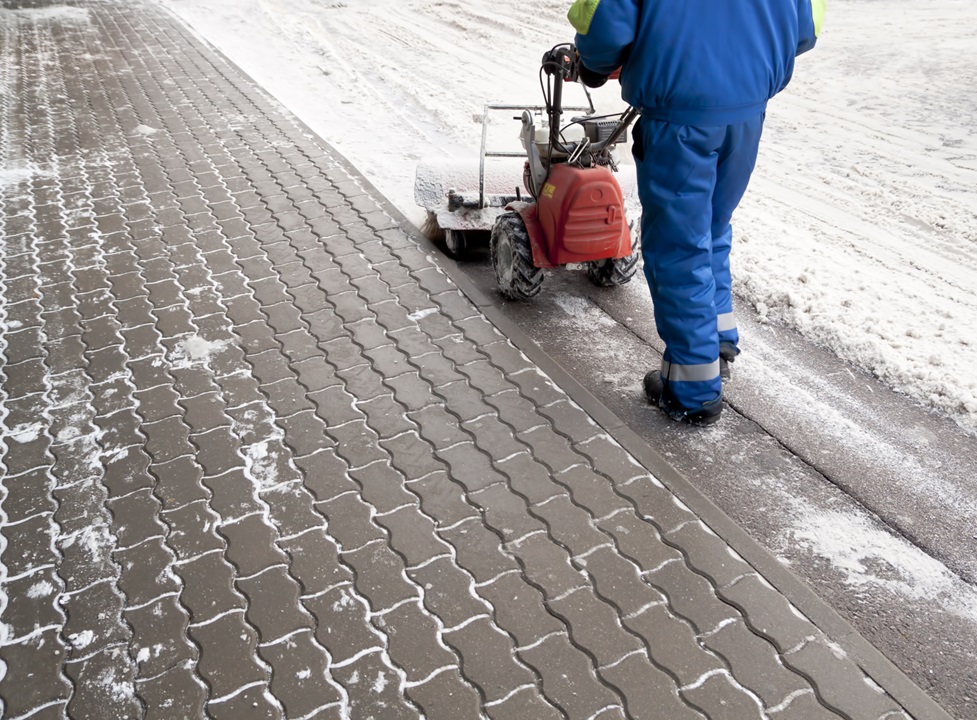
Avoid slippery pavement with this helpful advice!
When winter weather hits, icy driveways and parking lots become a serious safety concern. Slips, falls, and vehicle accidents are far more likely when asphalt surfaces freeze over. Choosing the best way to de-ice asphalt is essential for protecting your pavement, improving traction, and keeping everyone safe throughout the winter season.
Two of the most common de-icing methods are salting and sanding. While both can help manage icy conditions, each has advantages and drawbacks. Understanding how they work—and when to use them—can help you decide which solution is best for your asphalt surfaces.
Why De-Icing Asphalt Requires the Right Approach
Asphalt is durable, but it is not immune to winter damage. Freeze-thaw cycles allow water to seep into tiny cracks, where it expands as it freezes and worsens surface deterioration. Choosing the best way to de-ice asphalt helps reduce ice buildup while minimizing long-term pavement damage.
Salting Asphalt: The Pros
Salting is one of themost widely used methods for melting ice. Salt works by lowering the freezing point of water, making it harder for ice to form and easier for existing ice to melt.
One major advantage of salt is its effectiveness. When applied correctly, it can quickly break down snow and ice, restoring safe driving and walking conditions. Salt is also affordable and readily available, making it a convenient option for homeowners and businesses alike. Application is simple—you can spread it evenly over your driveway, walkway, or parking lot and allow it to work on its own.
Because of its speed and accessibility, many people consider salting the best way to de-ice asphalt when quick results are needed.
Salting Asphalt: The Cons
Despite its benefits, salting does have drawbacks. Over time, salt can be harmful to surrounding vegetation, and runoff may damage lawns or landscaped areas. Road salt can also irritate pets’ paws, especially if animals lick their feet after walking across treated surfaces.
Temperature also plays a role. Salt becomes far less effective when temperatures drop below 20 degrees Fahrenheit, making it unreliable during extreme cold snaps. Additionally, salt can be messy—tracking residue into your home or business is a common annoyance.
Sanding Asphalt: The Pros
Sanding is another popular winter maintenance method, particularly when traction is the primary concern. Unlike salt, sand does not melt ice. Instead, it creates a rough surface that helps tires and shoes grip slippery areas.
Sand is affordable, easy to apply, and does not harm vegetation or pets. For icy driveways, steep slopes, or parking lots where slipping is a concern, sanding can be an effective short-term safety solution.
Sanding Asphalt: The Cons
While sanding improves traction, it does nothing to remove ice. If a thick layer of ice is already present, sand alone will not resolve the problem. Like salt, sand can also be messy, often ending up inside buildings or clogging nearby drains.
Sanding is also less effective in extremely cold temperatures and requires cleanup once winter conditions improve, which can add maintenance time and cost.
Salt or Sand: What’s the Best Way to De-Ice Asphalt?
So, what is the best way to de-ice asphalt? The answer depends on your priorities and weather conditions.
If your goal is to melt ice quickly and restore clear pavement, salt is typically the better choice, especially when temperatures are above 20 degrees Fahrenheit. If protecting nearby landscaping or pets is more important, or if you only need to improve traction temporarily, sand may be the safer option.
In many cases, a combination of both methods works best. Applying salt to break down ice and following up with sand for traction can provide safer, more effective results during winter storms.
Final Thoughts on Winter Asphalt Safety
Winter weather doesn’t have to bring unsafe conditions. By understanding your options and choosing the best way to de-ice asphalt for your specific situation, you can reduce hazards and protect your pavement all season long.
Whether you prefer salting, sanding, or a combination of both, proper winter maintenance ensures safer exits from your driveway, parking lot, or walkway—helping you and your visitors stay safe until warmer weather returns.
Receive Asphalt Paving Services with Tri-State Paving
Call Tri-State Paving. We’re a seasoned asphalt pavement company based in Maryland and have the experience and knowledge to help you with asphalt, concrete, and hardscaping projects.
We refuse to sell hot air to our customers, and that’s why we have been around for over four decades. We listen, inform, educate, and then decide what is best for our customers project and budget. If any problems arise during construction we keep our customers updated and respond to make the imperfect perfect.
Our area numbers are:
West Chester: 610.563.9456
Oxford: 610.932.3566
Delaware: 302.757.4100
Check back here for weekly updates on current projects, important paving facts and info, and smart ideas for homeowners interested in concrete, asphalt, or hardscaping work.
 ASPHALT
 Commercial
 Residential
 Industrial
 Decorative
 Sealcoating
 Infrared Repairs
 CONCRETE
 Flat Work
 Decorative
 Curbs/Gutters
 Steps
Steps
 Slab Jacking
 Pump Trucks / Pump Trailers
 HARDSCAPES
 Walls / Borders / Curbs
 Walks / Patios
 Aprons
 Steps
Steps
 Columns / Fire Pits
 Outdoor Kitchens